
CHS
Design Sprint
Overview
Evan approached me with the idea of running a design sprint to help his team work through several challenges they were experiencing in their go-to-market planning and strategy phase. The team recognized that it’s significantly easier to move ideas into development when there is a shared understanding of the problem, alignment on a well-thought-out solution, and a tangible prototype to rally around.
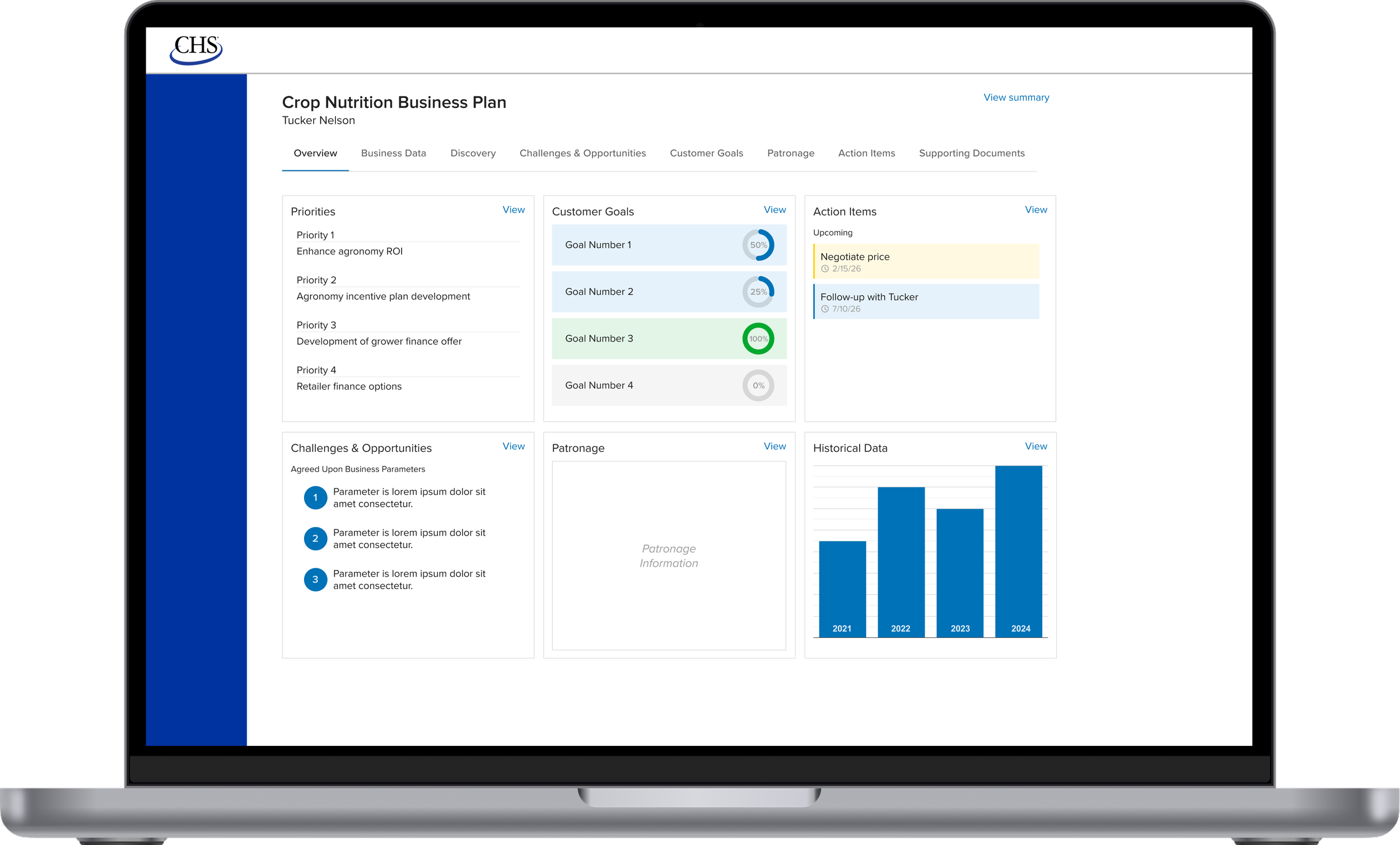
Together, we narrowed the focus to one area with strong potential for impact: creating customer account plans. While account planning was already part of the sales process, it lacked consistency, shared structure, and clarity across teams. We aligned on using the design sprint framework to explore how a more intentional, repeatable planning tool could better support account managers and ultimately create more value for customers.
Defining the Future
The long-term goal of this work is to make annual account planning a value-generating process by Fiscal Year 27. Rather than treating planning as a one-time or administrative exercise, the vision is for it to actively drive growth, improve collaboration across teams, and ensure customer needs are clearly captured and acted upon. The sprint served as an early step toward defining what that future state could look like and how teams might work together to achieve it.
Understanding the Current State
The purpose of this sprint was to gain a deeper understanding of current-state sales workflows across CN and CP, and to identify what was helping teams succeed versus where friction existed. By examining how account planning was done today, we aimed to uncover gaps in process, clarity, and alignment that made planning less effective than it could be. This understanding was critical to ensuring any future solution would build on what already worked while addressing real, day-to-day challenges faced by account managers.
Value & Impact
This sprint aligned teams around a structured, repeatable account planning process that drives growth, improves collaboration, and ensures customer needs are clearly captured and acted upon. By creating shared understanding and common language across sales, strategy, and planning efforts, the work laid a foundation for near-term training and roadmap decisions, as well as longer-term enhancements and strategic alignment.
-
Roles
Workshop Creation
Workshop Facilitation
Prototyping
Presentation
-
Team Members
Product Owner: Evan Sieling
Facilitation Help: Carly Graves
-
Tools Used
Figma
Miro
Microsoft PowerPoint
Microsoft Teams
01 Creation
The workshop was intentionally designed to balance structure with flexibility, ensuring the team could move quickly while grounding decisions in shared understanding. I took the lead on designing the sprint experience, adapting the Sprint framework by Jake Knapp to fit our time constraints, audience, and goals. The focus during creation was on shaping the agenda, selecting the right tools, and building artifacts that would support clarity and engagement throughout the workshop.
Sprint Structure & Timeline
Adapted the traditional design sprint format to fit a compressed schedule
Planned two in-person working sessions: four hours on Tuesday and six hours on Wednesday
Allocated Thursday and Friday for rapid prototyping
Scheduled a two-hour session the following Monday to review the prototype, gather feedback, and iterate
Treated the prototype review as the first round of user feedback, with additional testing planned for later phases
Framework & Approach
Used Sprint by Jake Knapp as the foundational framework
Adjusted activities and pacing to fit time constraints while preserving key sprint principles
Designed the workshop to move from problem understanding to solution exploration and validation
Tools & Artifacts
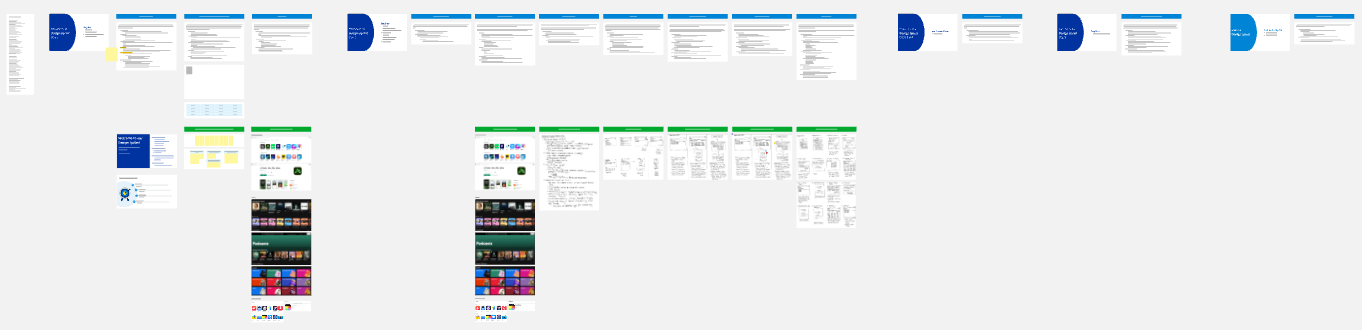
Miro board outlining the end-to-end workshop flow, activities, and timing
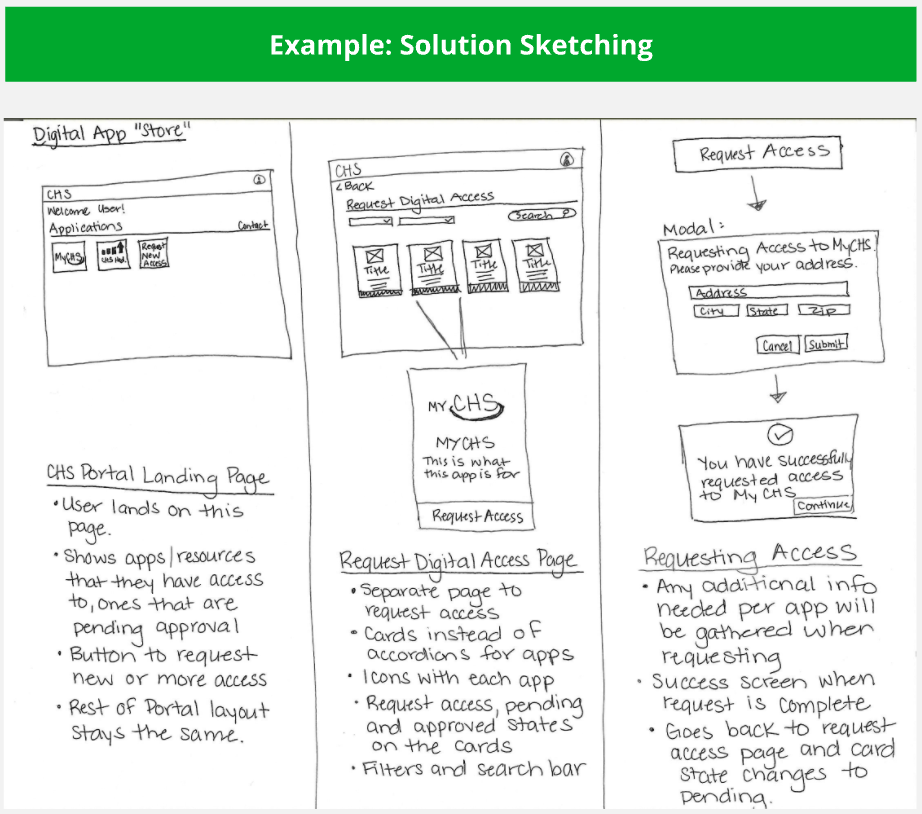
Embedded example artifacts within Miro to demonstrate expected outputs, using unrelated topics to avoid bias
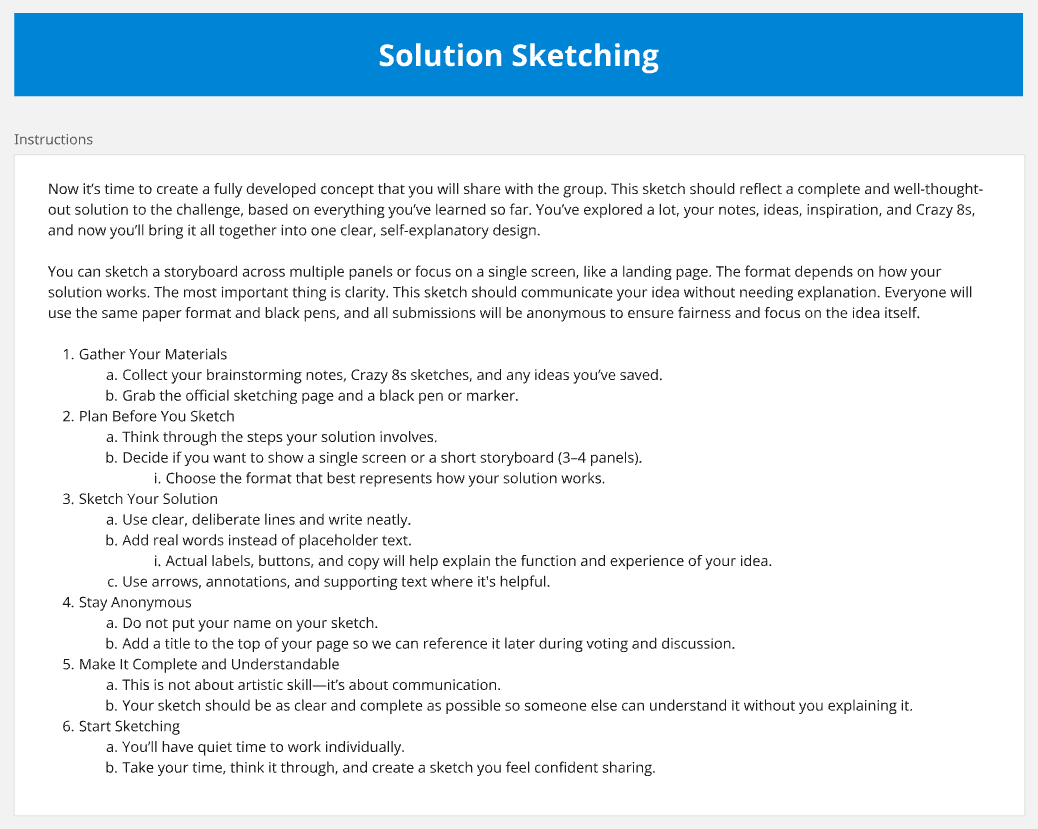
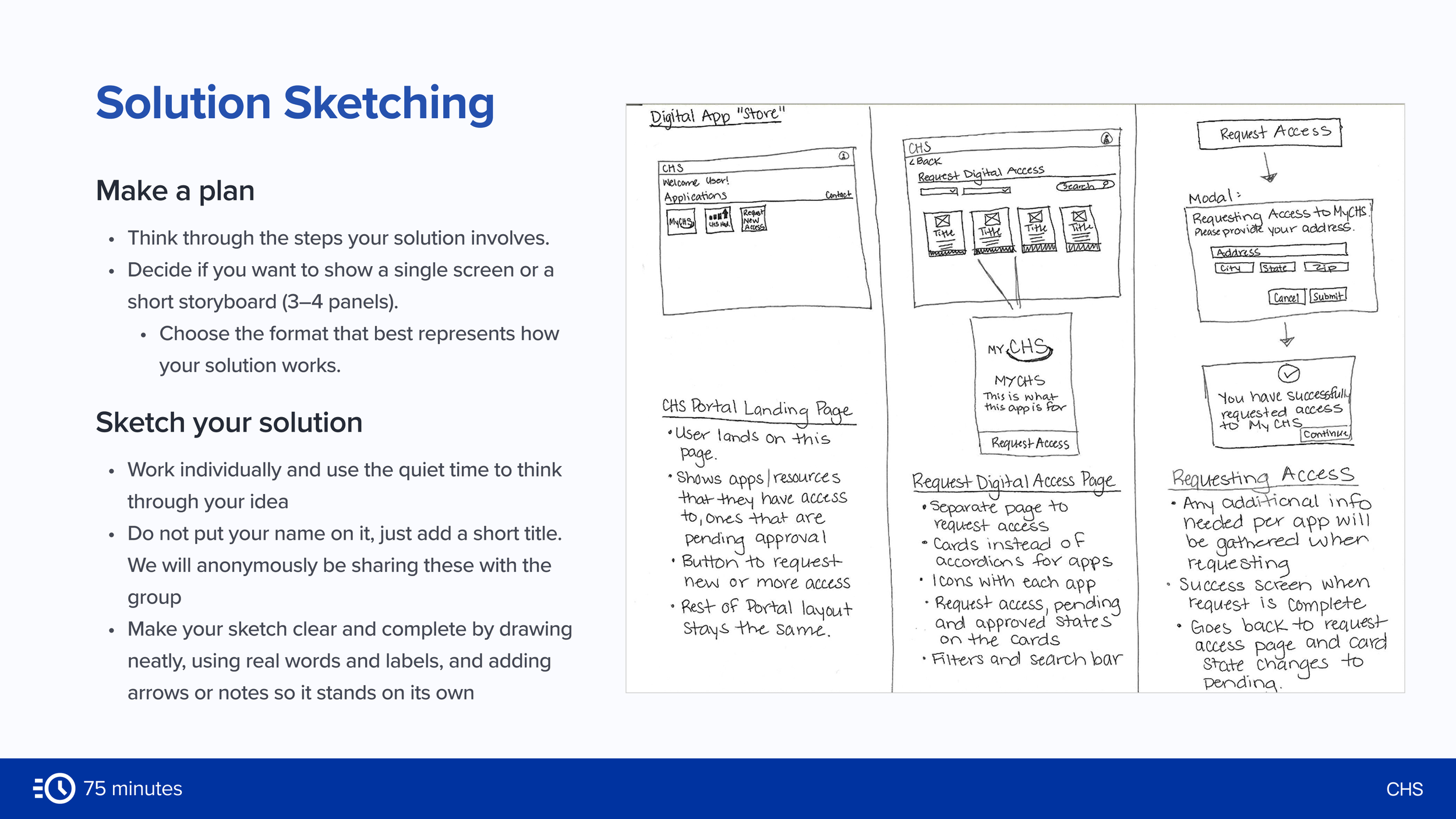
PowerPoint facilitation deck with step-by-step instructions and visual examples
Physical, laminated copies of key artifacts to support in-room collaboration and discussion
02 Facilitation
The workshop was facilitated over two in-person days, with each day intentionally structured to build momentum—from shared understanding to concrete solution direction. Activities were adapted from the Sprint framework and adjusted in real time to fit the group’s energy, expertise, and goals. The facilitation focused on creating space for every participant to contribute while keeping the group aligned and moving forward..
Day One: Alignment & Ideation
Opened the workshop with introductions, an overview of the sprint, and alignment on the sprint goal and sprint questions
Combined Ask the Experts and How Might We activities, recognizing that the participants in the room were the subject-matter experts
Invited each participant to share current pain points, existing tools or processes, and areas they felt could be improved, while others took notes and asked follow-up questions
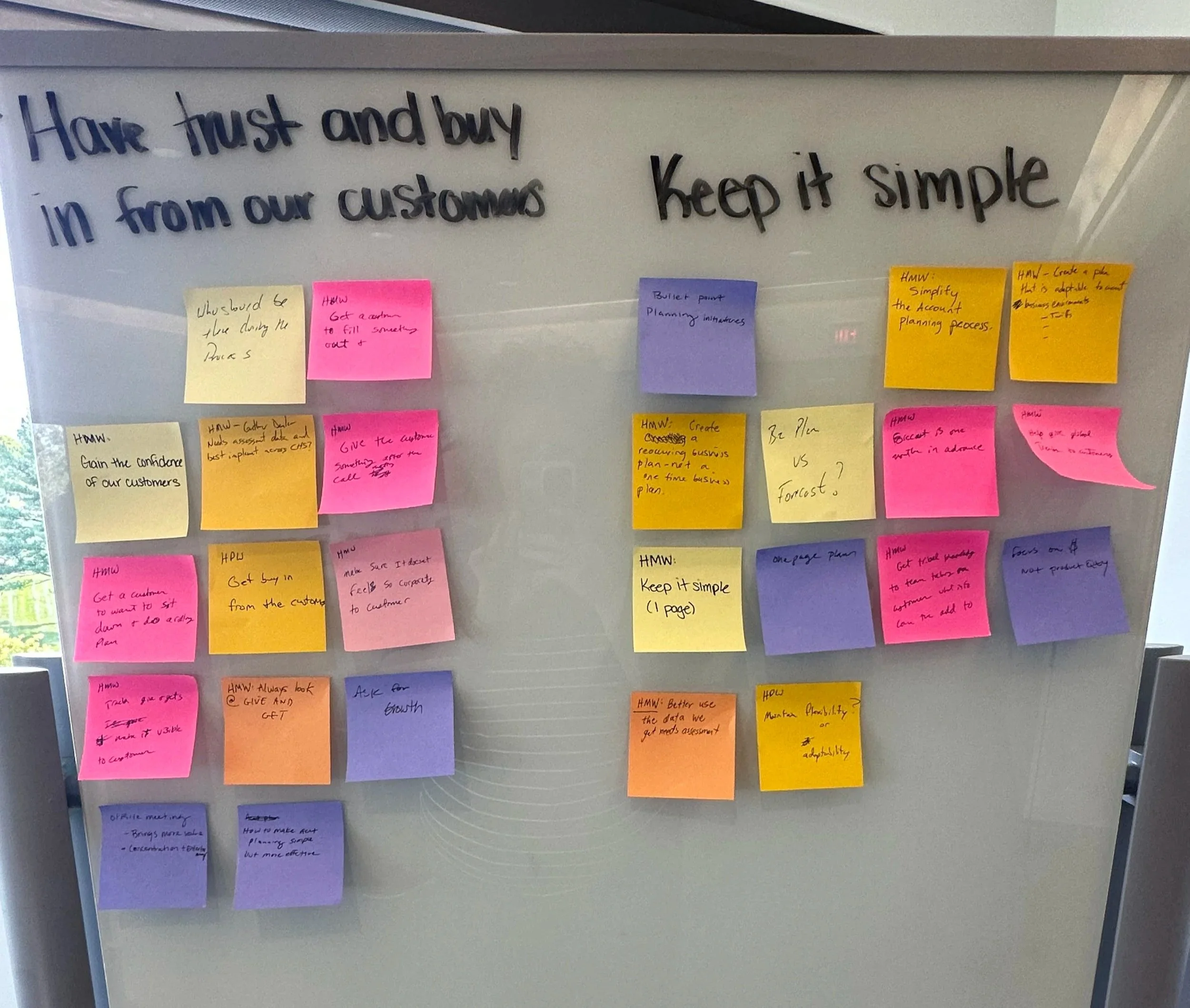
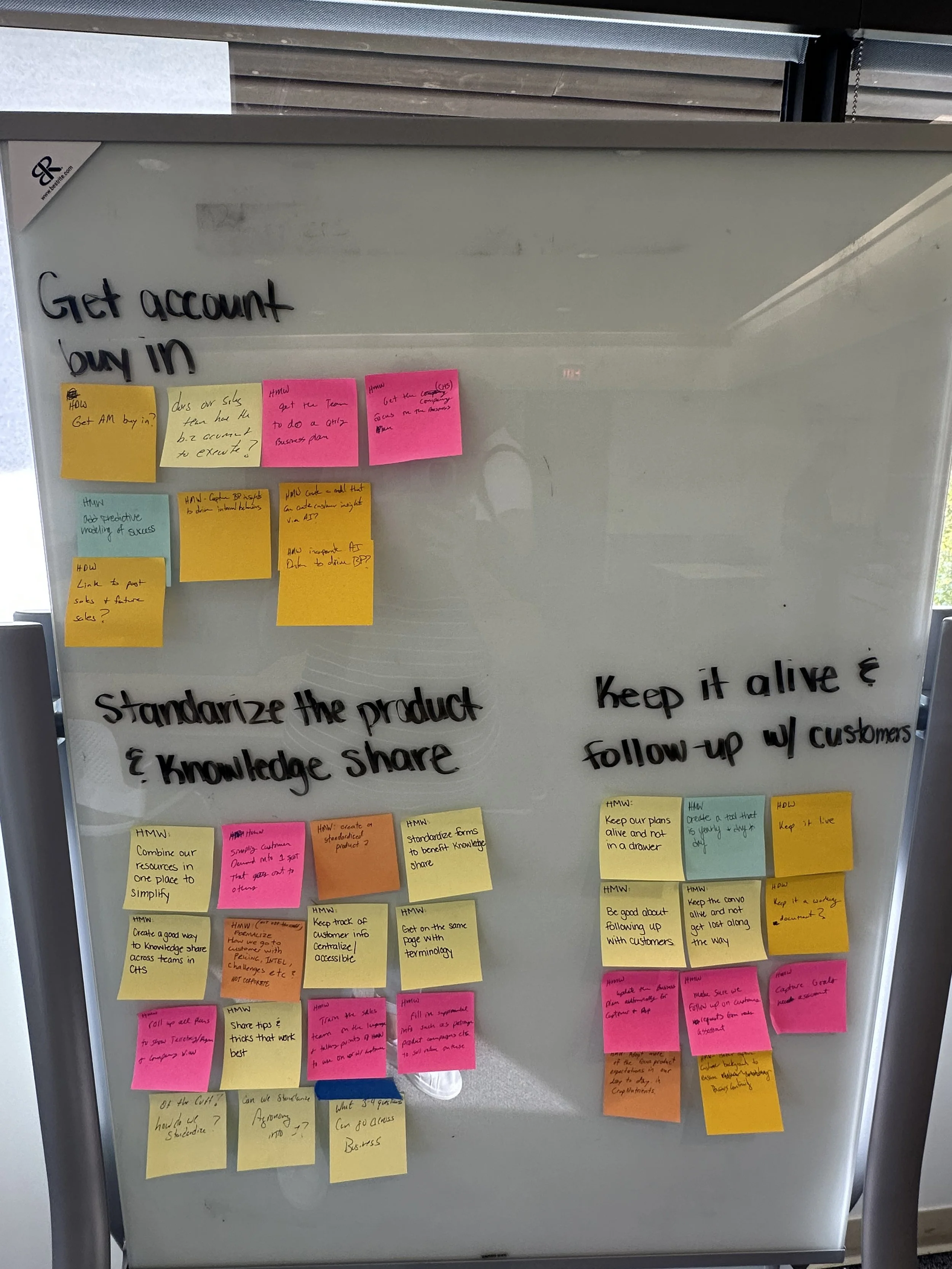
Captured insights as How Might We questions and affinity-mapped them as a group to identify themes and opportunities
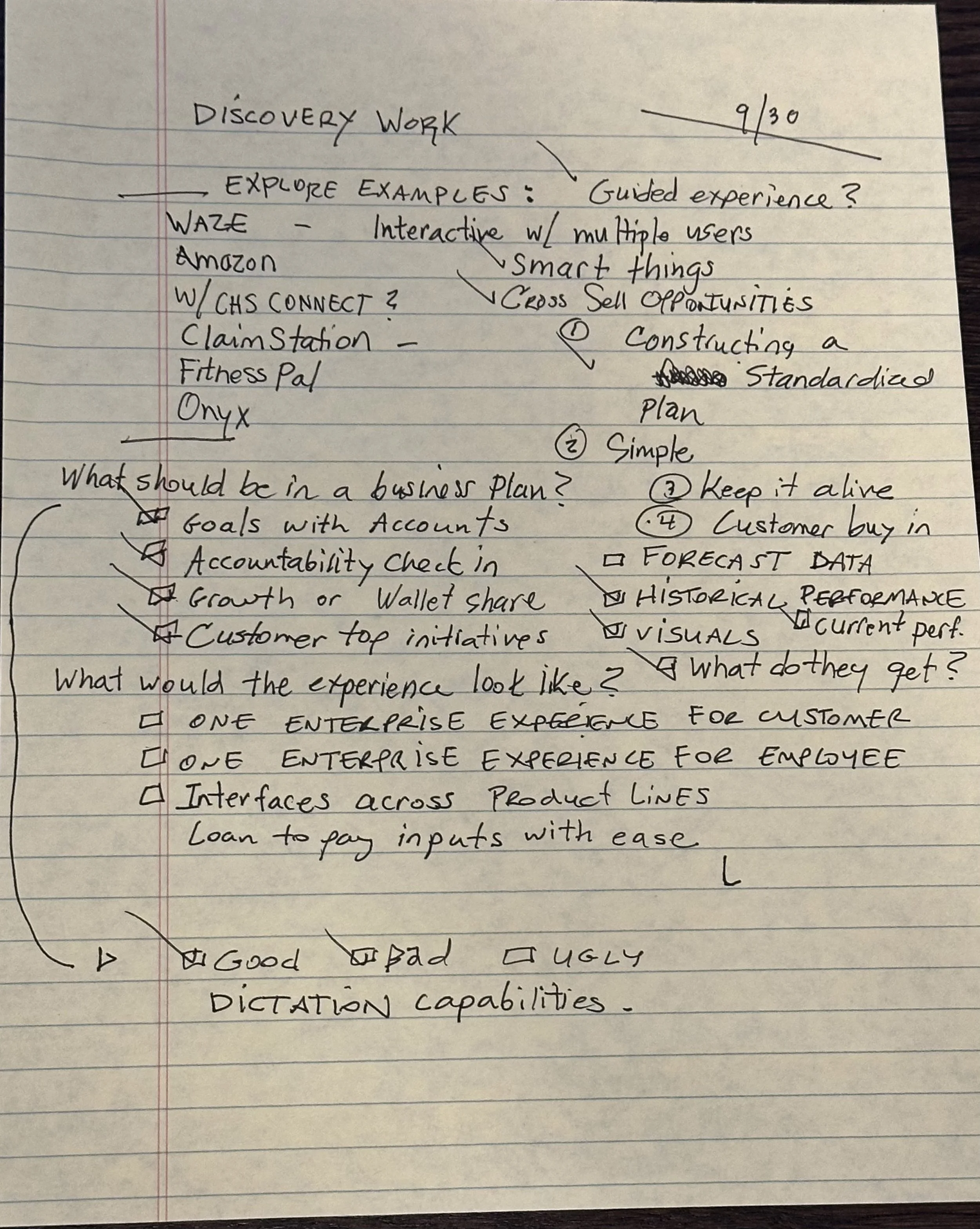
Ended the day with ideation and brainstorming, asking participants to look beyond CHS and identify other products or tools with features they found valuable
Emphasized the mindset of not reinventing the wheel, but instead adapting proven ideas to work for CHS
Day Two: Concept Development & Direction
Began with additional brainstorming to help participants reset and reconnect with insights from the previous day
Asked participants to review their notes and begin thinking about what they would want to see built, including early directions and concepts
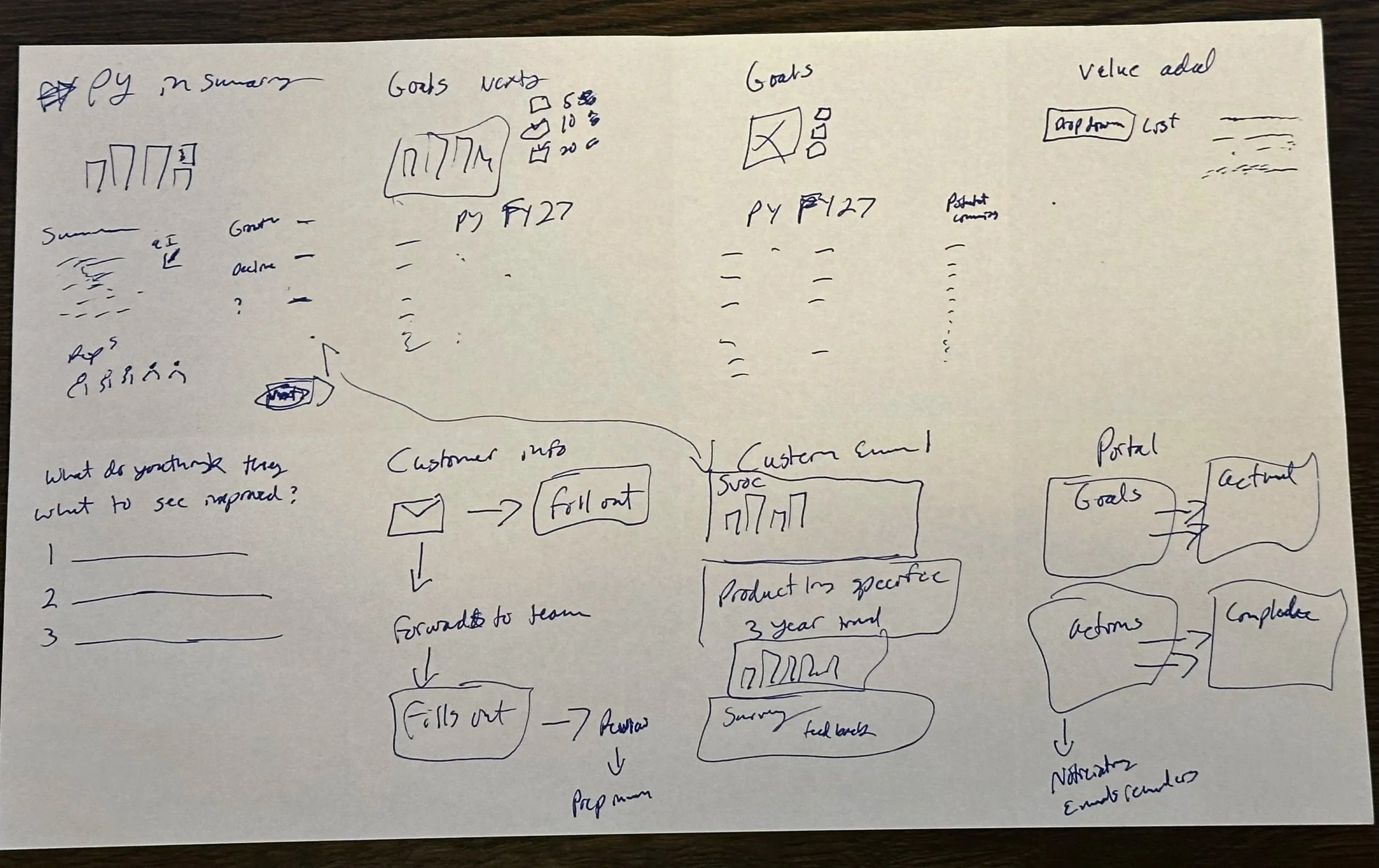
Used Crazy 8s to encourage rapid idea generation and get ideas onto paper quickly
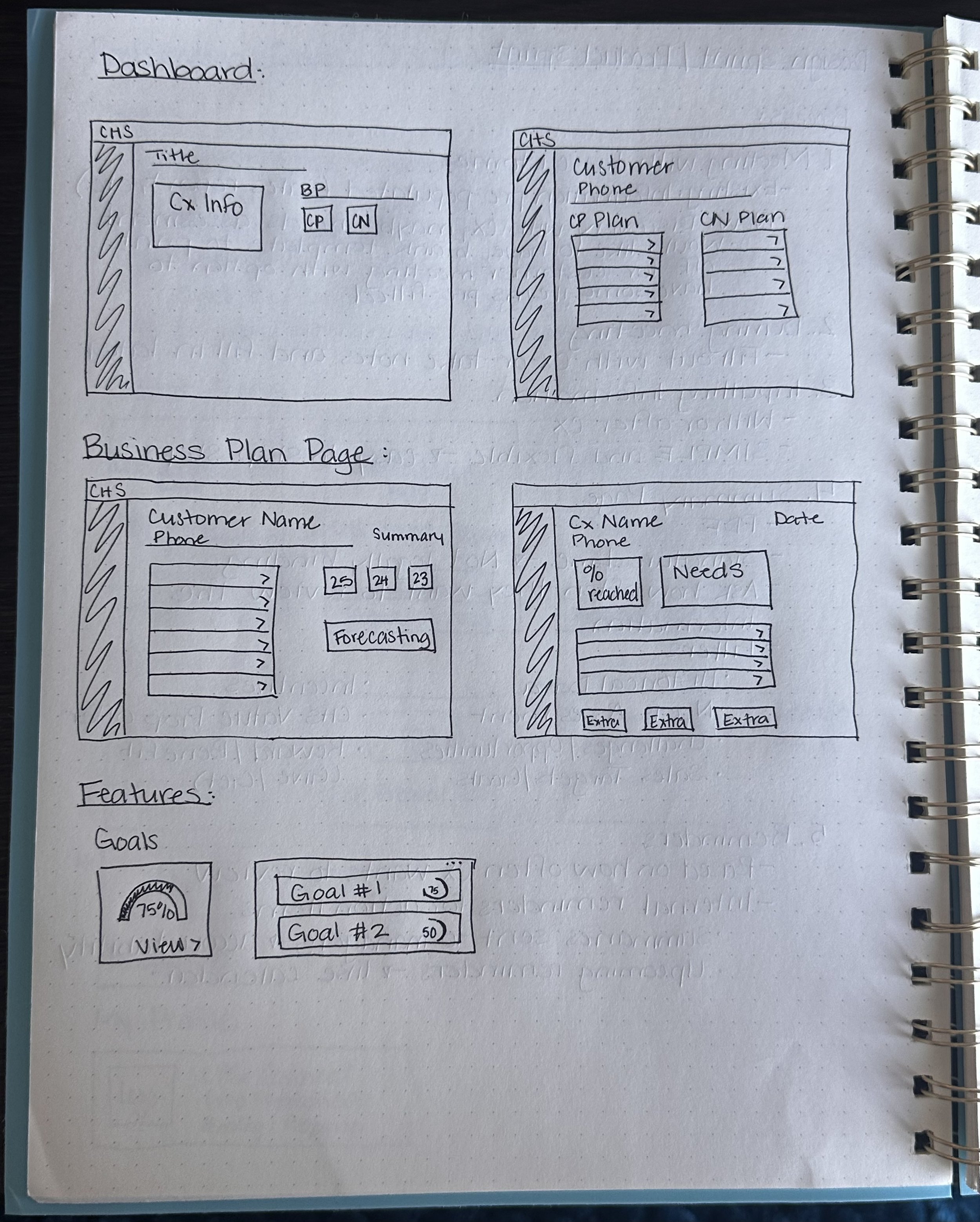
Transitioned into solution sketching, where participants mapped out the desired planning process using as many screens as needed
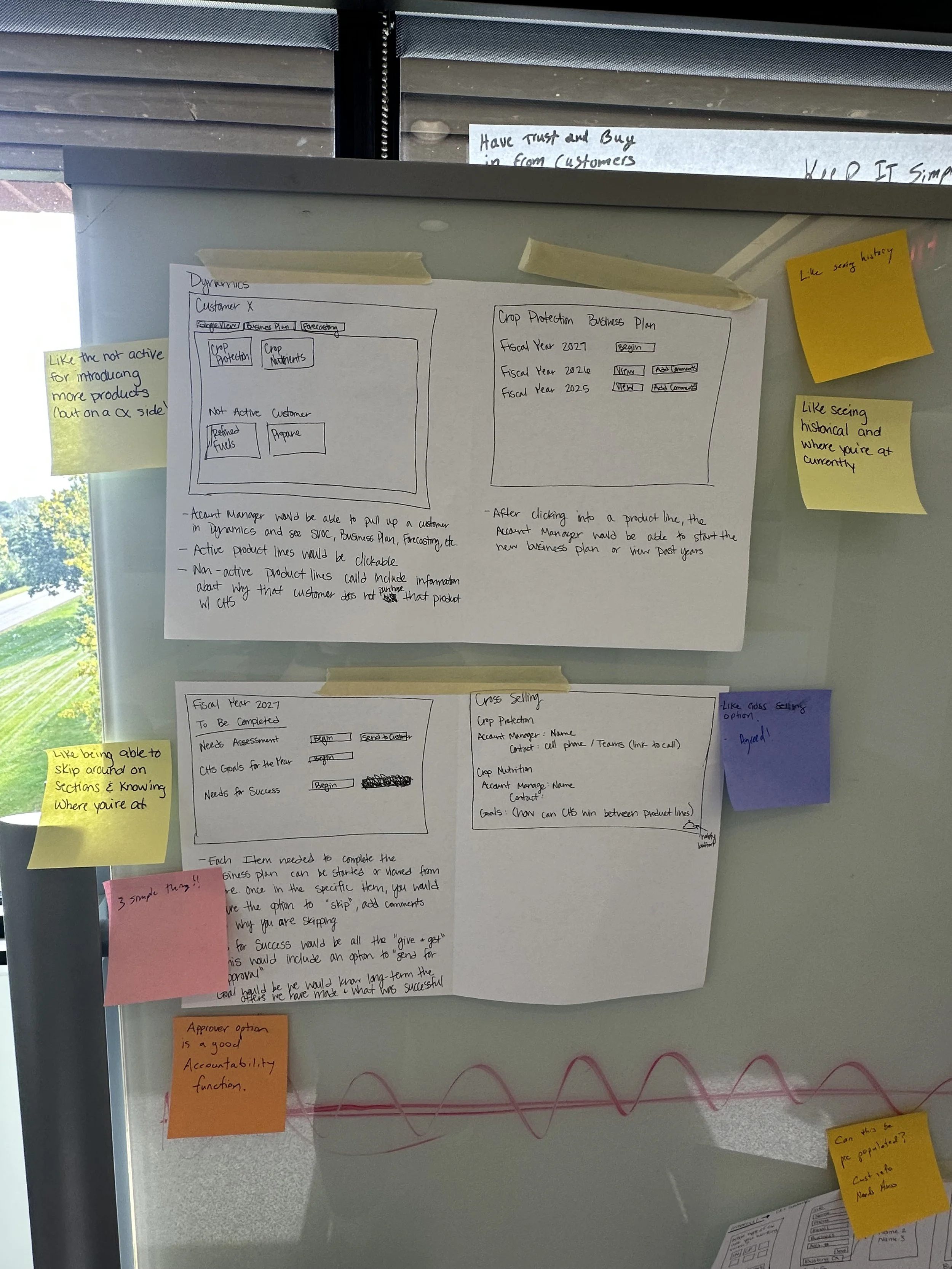
Conducted a gallery walk, allowing participants to review sketches and leave sticky-note feedback on elements they liked or found valuable
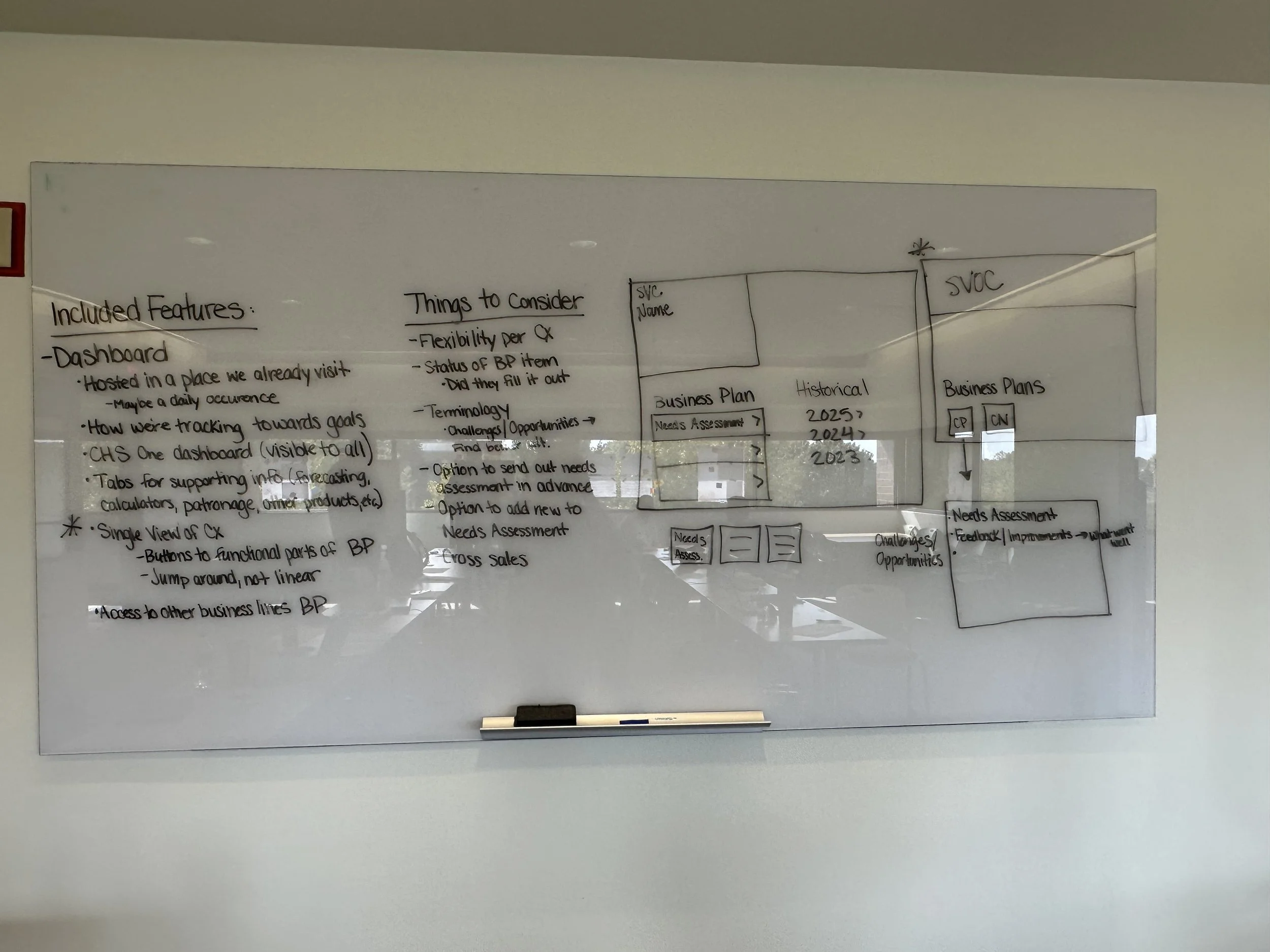
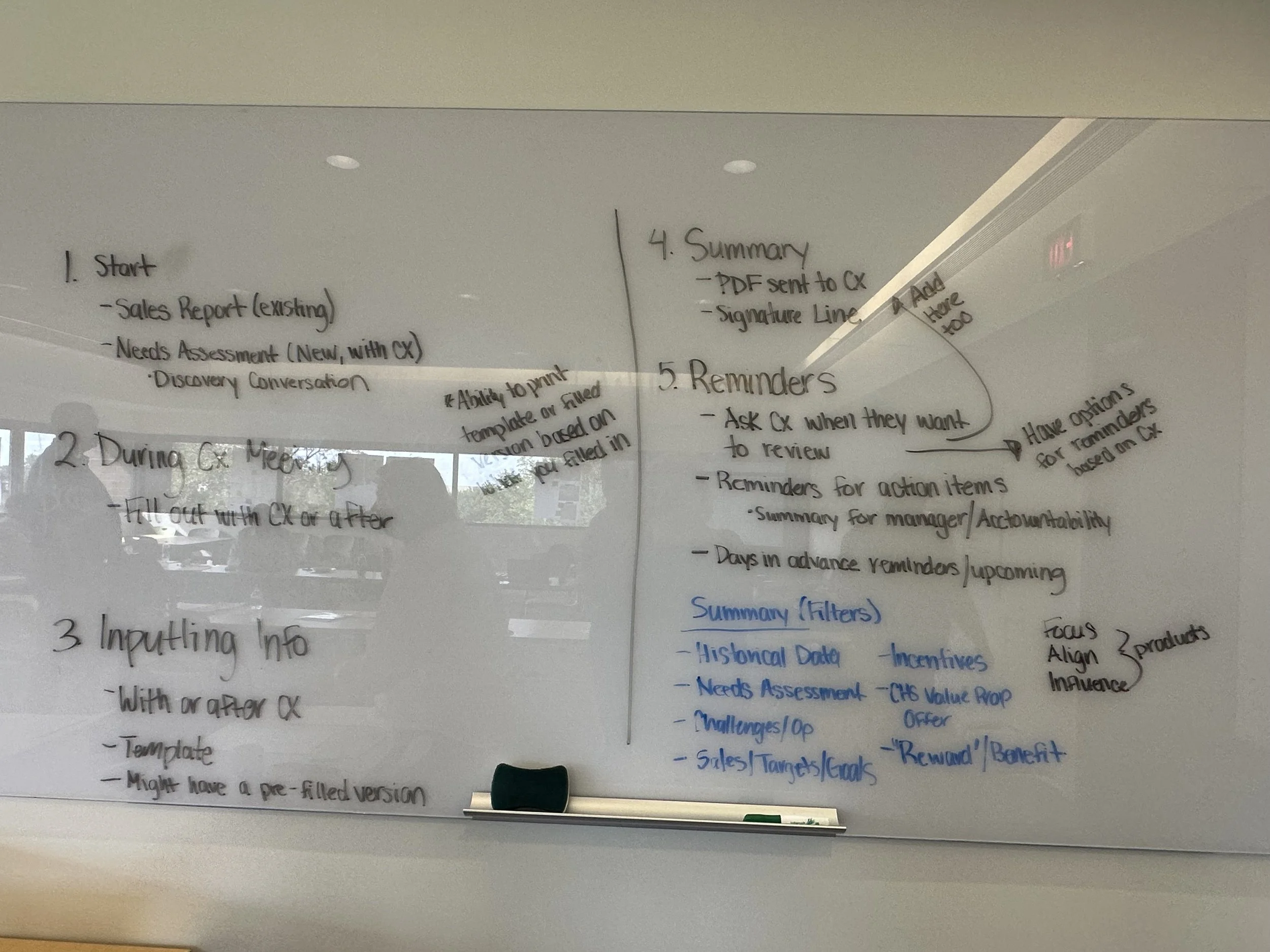
Concluded with storyboarding on a whiteboard, combining the strongest ideas into a shared outline that distinguished core needs from nice-to-have features
03 Prototyping
Following the workshop, I spent the next day and a half translating the group’s ideas into a tangible, working experience. The goal of this phase was not to finalize a solution, but to create something concrete that reflected the team’s collective input and could be used to gather meaningful feedback. This work served as a bridge between the collaborative workshop and future technical and strategic conversations.
Inputs
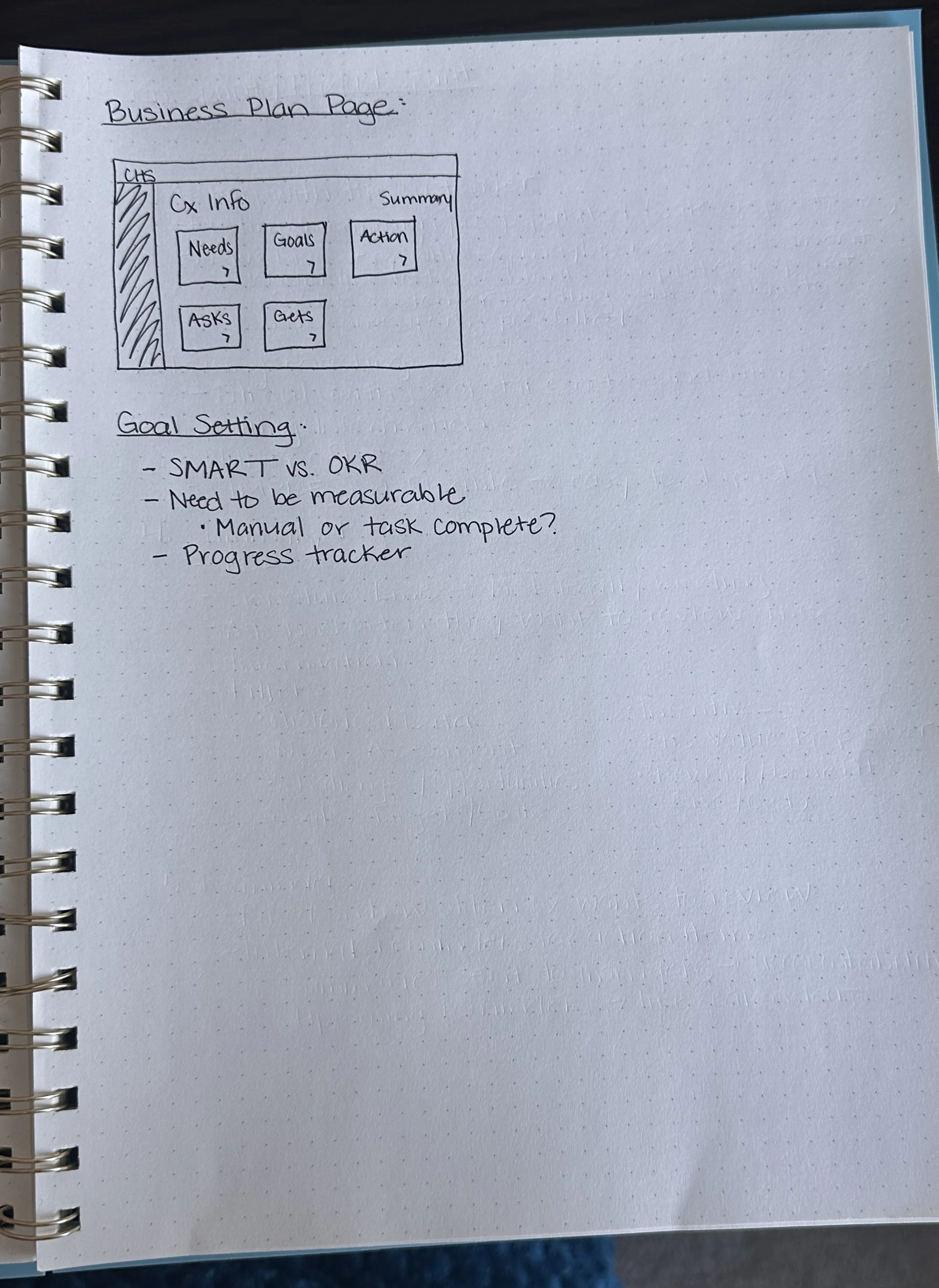
Used facilitation notes, participant sketches, sticky notes, and the finalized storyboard as primary inputs
Synthesized ideas across multiple concepts to reflect shared priorities rather than individual solutions
Focused on representing the end-to-end planning experience discussed during the workshop
Design Decisions
Used the standard CHS UI kit to align with existing products and patterns
Kept the experience intentionally flexible due to uncertainty around where the tool would ultimately live
Designed for concept clarity over technical specificity to support early architecture discussions
Accounted for funding as a factor influencing timing and implementation approach
Outputs
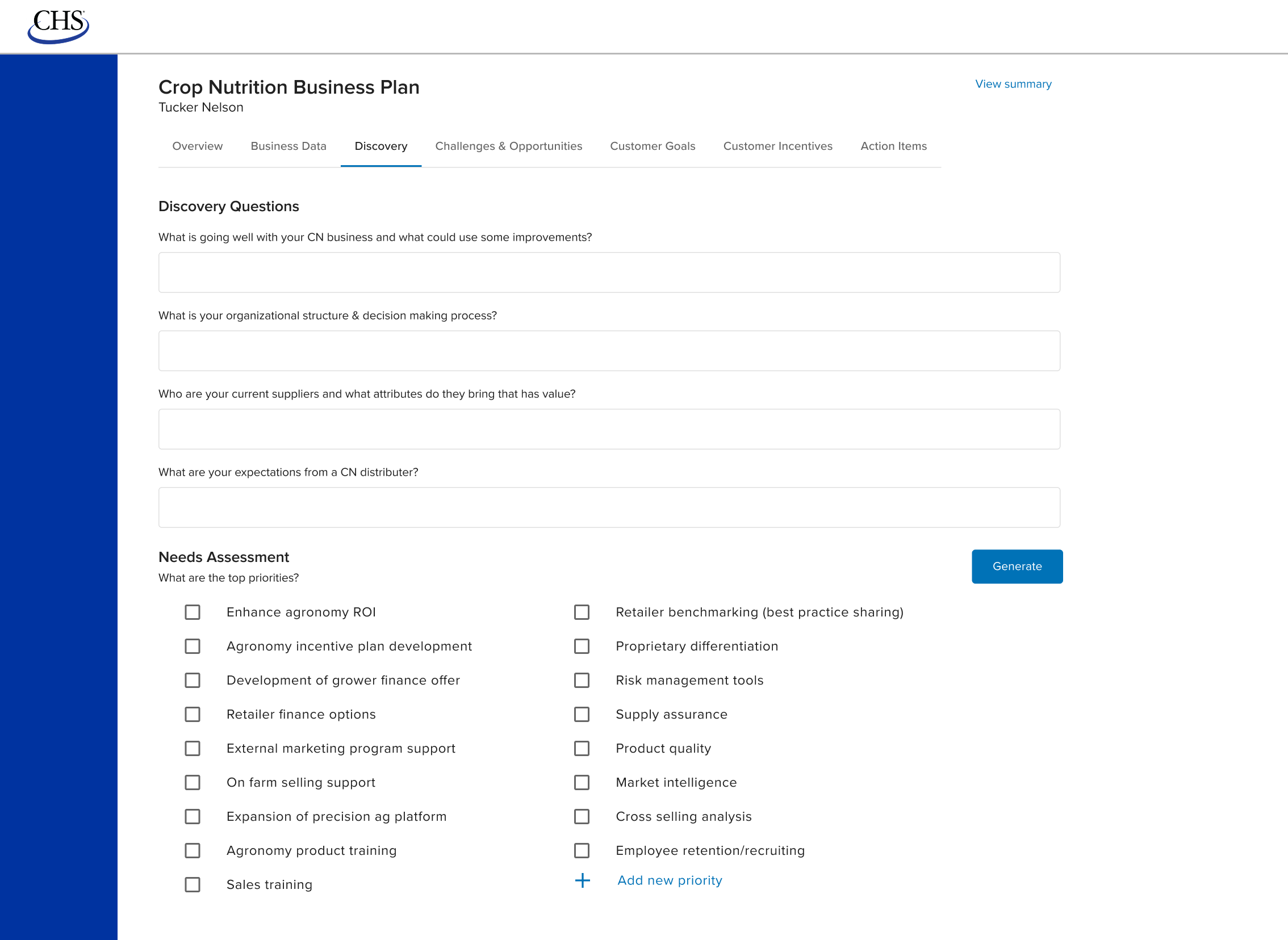
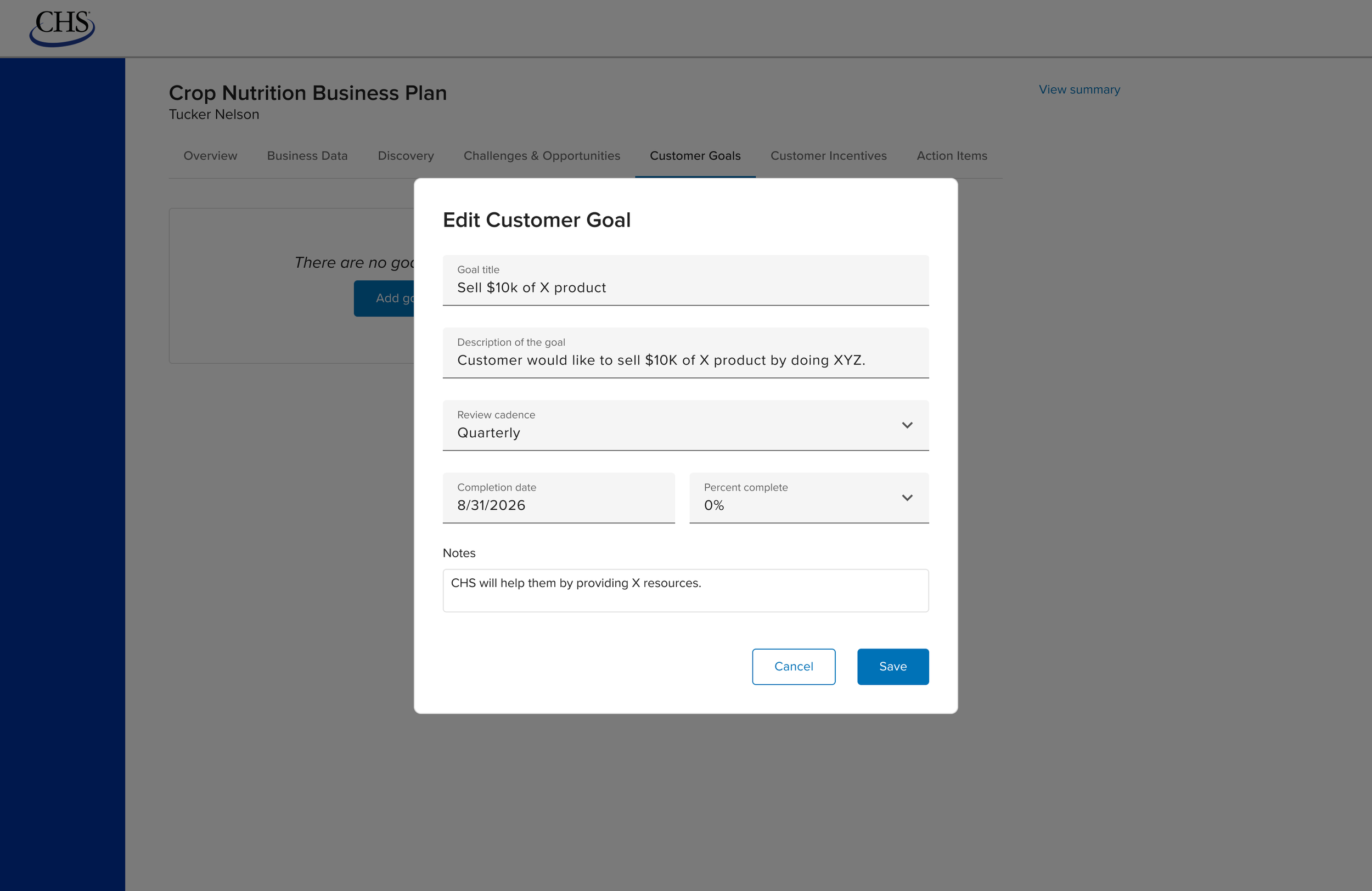
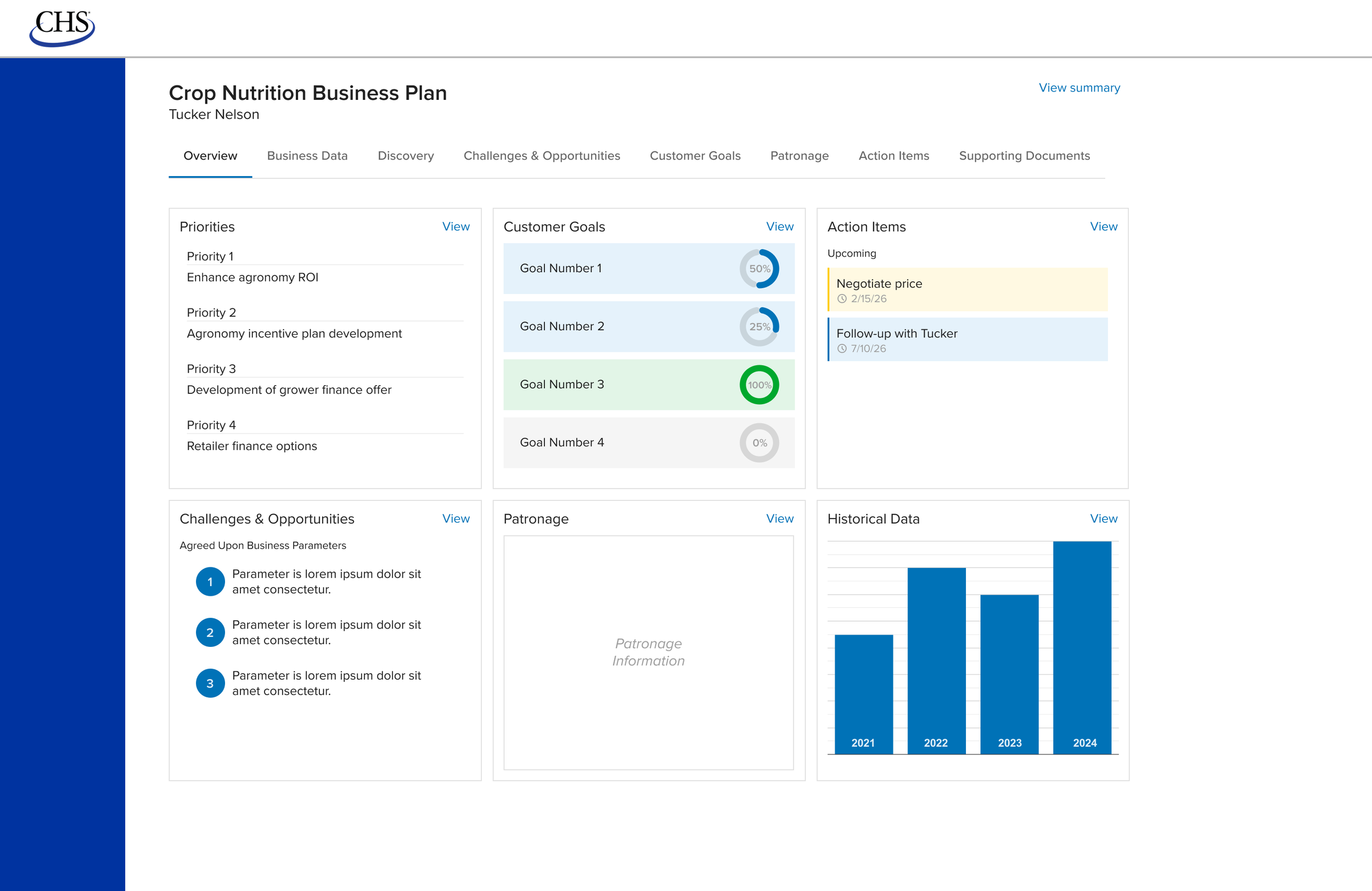
Built the experience in Figma
Used placeholder content to keep feedback focused on structure, flow, and functionality
Delivered a fully clickable, end-to-end experience
Used this artifact as the foundation for the next phase: feedback and iteration

04 Feedback & Iterations
The feedback session marked the team’s first opportunity to react to the planning experience as a complete, end-to-end flow. I walked the group through the entire experience to gather high-level impressions before revisiting each section in more detail to capture specific, actionable feedback. Treating this session as an initial user feedback loop helped validate the direction while identifying opportunities for refinement.
Feedback Approach
Presented the full experience to establish context and gather overall reactions
Reviewed each section individually to capture targeted feedback and improvement ideas
Encouraged open discussion to validate assumptions and surface gaps
Key Refinements
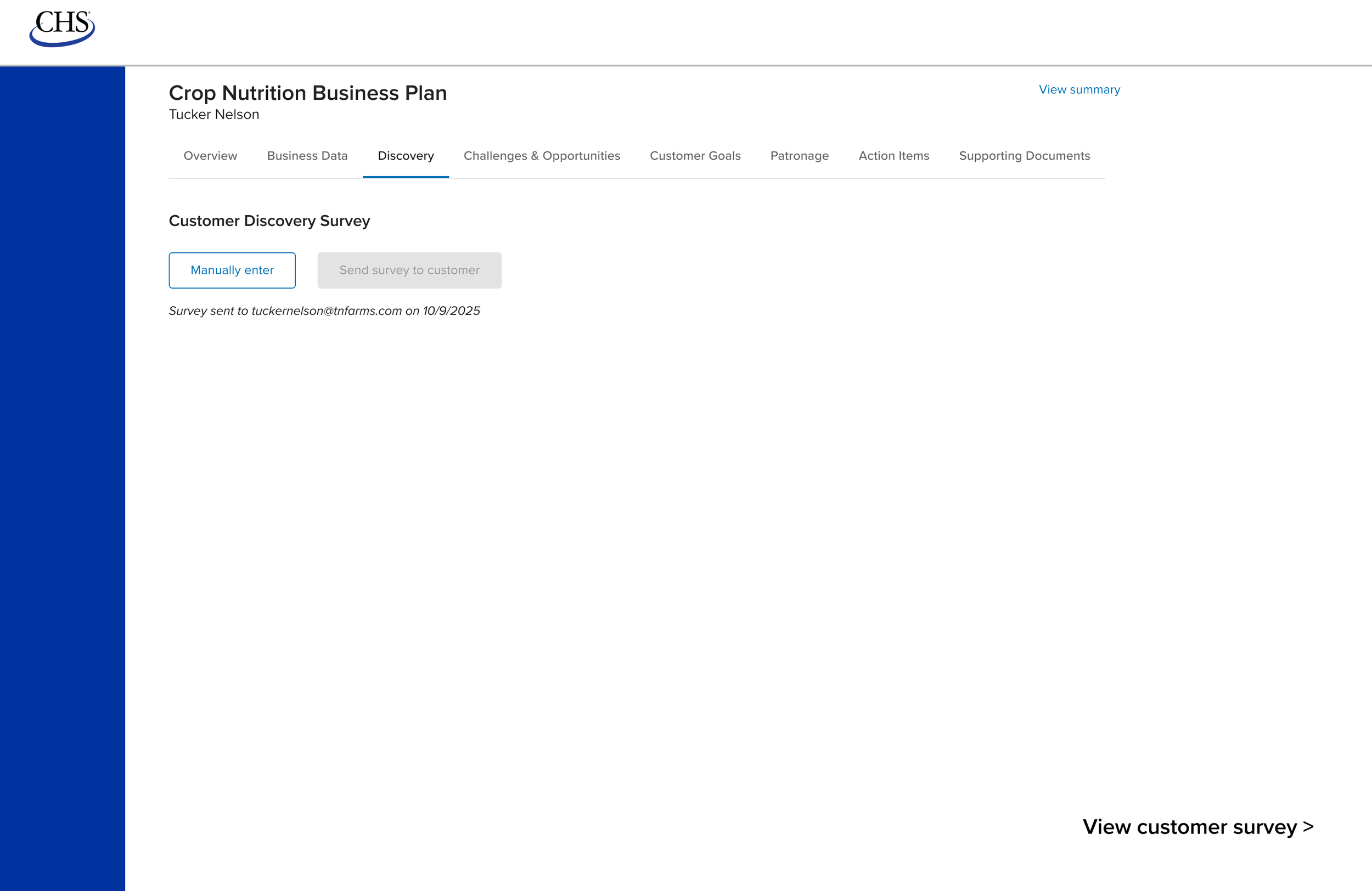
Added an option for a Needs Assessment to be sent directly to customers for completion
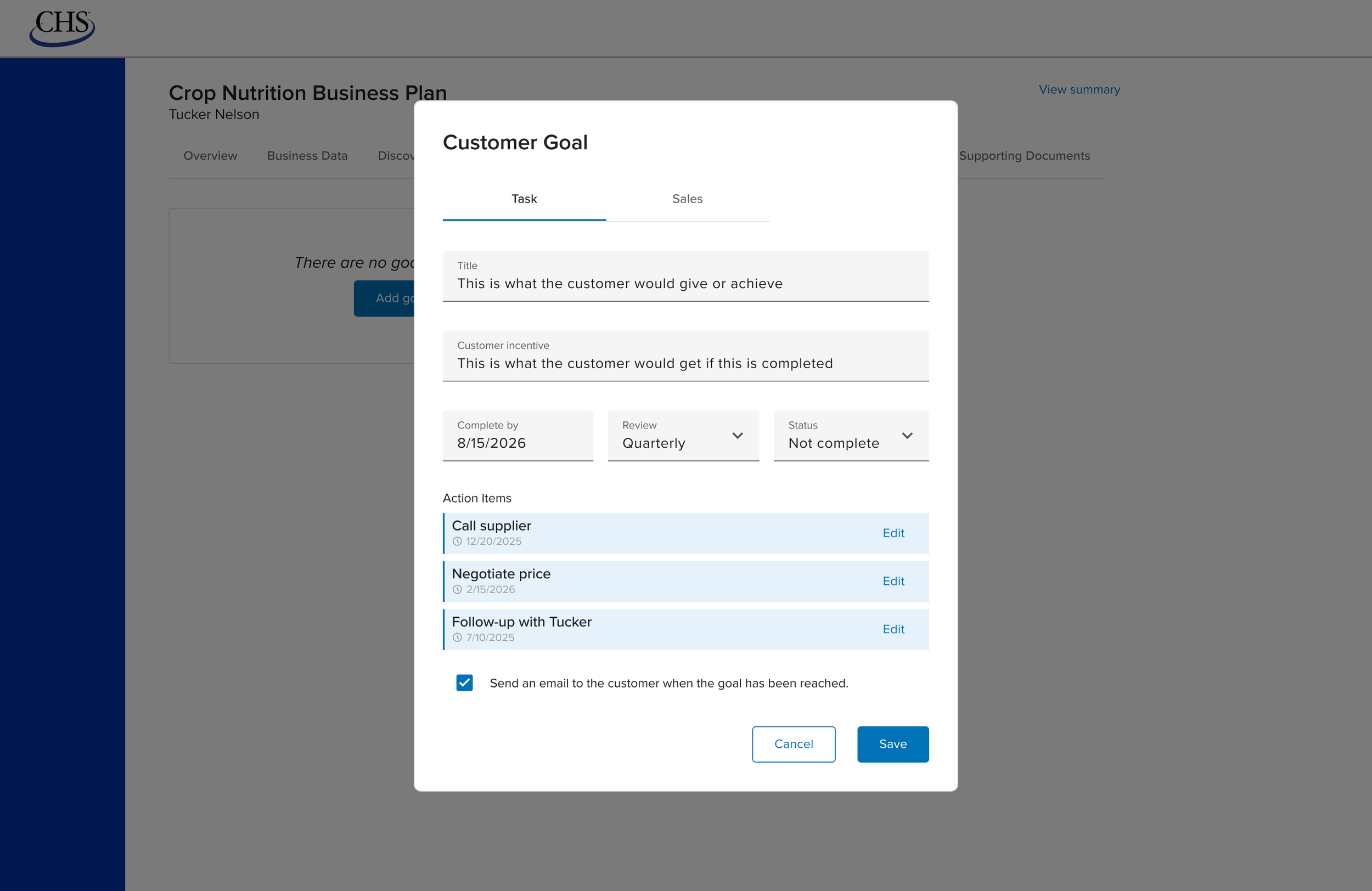
Expanded goal-setting to support multiple goal types and use cases
Introduced the ability to upload and download supporting documents within the plan
Iteration and Validation
Applied updates based on the group’s feedback
Shared an asynchronous walkthrough video to demonstrate changes and support broader review
Received strong alignment and enthusiasm from the group following the updates
One participant noted the experience matched “about 95% of what I was thinking in my head,” reinforcing that the solution accurately reflected team needs
05 Architecture
Following feedback and iteration, Evan and I met with two architects to explore the technical feasibility of the planning experience and discuss potential implementation paths. While my typical approach is to partner with engineering and architecture earlier in the process, this sprint intentionally prioritized validating the concept with users first. Given the uncertainty around funding, timing, and ownership, it was important to ensure the solution truly met the needs of the workshop participants before investing deeply in technical planning.
Approach and Rationale
Prioritized user validation before technical exploration to reduce risk
Ensured workshop participants saw tangible outcomes from their time and input
Used the prototype as a concrete artifact to align stakeholders and build confidence
Acknowledged upfront that funding and capacity constraints could pause progress at this stage
Architectural Feedback
Walked the architects through the full experience using the prototype
Confirmed the solution was technically feasible
Identified that an existing internal team could build the tool without requiring additional funding
Agreed to move forward with a playground version to explore the solution in a low-risk environment
06 Next Steps
With architectural feasibility confirmed, the focus now shifts to continued validation and refinement of the planning experience. The goal of the next phase is to ensure the solution supports real sales workflows while informing future prioritization and implementation decisions.
What’s Next?
Use the playground version to conduct additional user testing with sales teams
Gather feedback to refine structure, functionality, and workflows
Continue aligning outcomes from this work with training strategy
